
NEWS & UPDATES
NEWS & UPDATES
NEWSROOM
Biofuels could bolster Australia's fuel security but right now, so why are we giving it away? ABC News
Biofuels could bolster Australia's fuel security but right now, so why are we giving it away? ABC News
/
By ABC & Daniel Ziffer
/
6 mins
ABC's Daniel Ziffer investigates Australia's fuel security crisis "Under The Pump" and why biofuels like ethanol and biodiesel could be the answer hiding in plain sight.
/
By ABC & Daniel Ziffer
/
6 mins
ABC's Daniel Ziffer investigates Australia's fuel security crisis "Under The Pump" and why biofuels like ethanol and biodiesel could be the answer hiding in plain sight.
/
By ABC & Daniel Ziffer
/
6 mins
ABC's Daniel Ziffer investigates Australia's fuel security crisis "Under The Pump" and why biofuels like ethanol and biodiesel could be the answer hiding in plain sight.
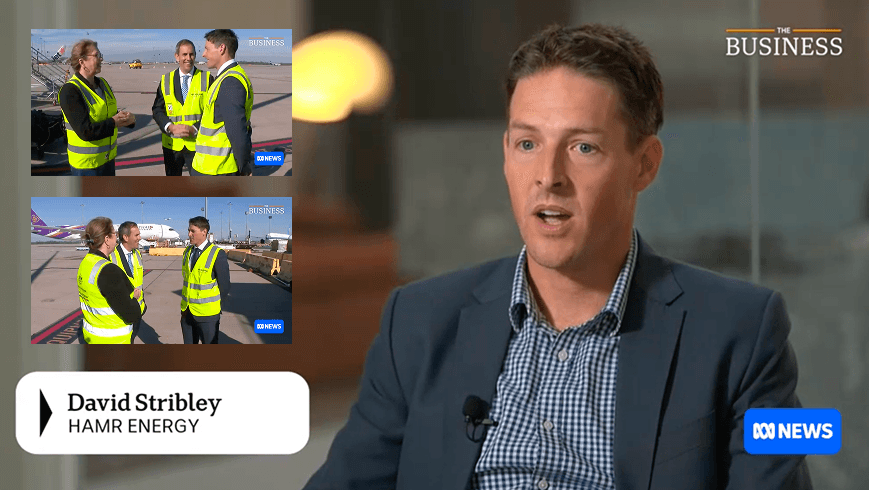
David Stribley featured on ABC deep-dive: Under the pump by Daniel Ziffer
HAMR Energy co-founder David Stribley joined Fraser Thompson of Cyan Ventures and Shahana McKenzie of Bioenergy Australia on ABC News to explore one of the most urgent and underreported challenges facing Australia: our dependence on imported liquid fuel.
The segment, produced by business reporter Daniel Ziffer aired on 15 April 2026 and is available to watch on ABC News online here:
HAMR Energy co-founder David Stribley joined Fraser Thompson of Cyan Ventures and Shahana McKenzie of Bioenergy Australia on ABC News to explore one of the most urgent and underreported challenges facing Australia: our dependence on imported liquid fuel.
The segment, produced by business reporter Daniel Ziffer aired on 15 April 2026 and is available to watch on ABC News online here:
Did you know? Australia controls less than 20% of its own liquid fuel supply, importing the other 80% to keep the nation moving. Yet we export $3 billion in feedstocks (such as canola, sugarcane residue, forestry biomass) every year to other countries who refine it into fuel and sell it back to us at four times the price.
"We are in a bizarre situation right now that we are exporting our feedstocks and we pay four times the price to actually then use it once it has been refined. It is a completely nonsensical arrangement."
— Fraser Thompson, Cyan Ventures
The Opportunity: Self-Sufficient and a Major Exporter
Australia has the agricultural scale, the renewable energy resources and the refining infrastructure to become a genuine biofuels powerhouse. Experts featured in the ABC segment believe the opportunity is exceptional.
"Are the potentials significant? Yes. We're starting from a relatively low base, so our potential is significant. The opportunity space from where we are today is huge, and what's really exciting about Australia is we actually have all the resources."
— David Stribley, HAMR Energy
Biofuels, including biodiesel for heavy trucks and machinery and ethanol blended with petrol can be made from an enormous range of feedstocks: sugarcane, canola, residual forestry biomass and even CO2 and hydrogen to produce what is essentially a low carbon liquid electric fuel.
"I think that's what's exciting about biofuels, they can be made from so many different feedstocks. You've got companies looking at low-carbon liquid fuels from sugar, from ethanol type production. You've got companies like ours that are using residual forestry biomass. And then you can go to the full spectrum where you're producing what is essentially an electric fuel, think of it almost as a battery, but in liquid form."
— David Stribley, HAMR Energy
The numbers back the optimism. According to Shahana McKenzie at Bioenergy Australia, Australia could immediately add around "10 days to current fuel storage" simply by blending available biofuels into supply. Existing refinery infrastructure, currently producing 175 million litres annually, could expand to 650 million litres with investment and policy support.
"We have all the assets to be a self-sufficient fuel producer and also an exporter. Bigger tanks do not solve this. They are a short-term measure. If you have blocked shipping lanes, even the largest fuel storage is not going to be a good enough insurance policy. The litmus test for us right now is: are we going to think long-term about how we develop sovereign capabilities in fuel security, so we will never face this situation again?"
— Fraser Thompson, Cyan Ventures
Australia Has Done It Before
The vision isn't without precedent. At one point, Australia was a net exporter of oil fully energy self-sufficient in the 1980s, when a wave of domestic refineries came online.
"I mean one of the challenges with where we are today is we don't have a lot of oil left. We used to, if you consider the Bass Strait Oil and Gas field. At one point, Australia was a net exporter of oil. We were self-sufficient in the 80s, and that's when we saw all these refineries pop up. If we cast forward in the next 20 to 30 years, we actually have a lot of those resources today, but they're going to look a little different. They're not going to be your traditional refineries."
— David Stribley, HAMR Energy
Other jurisdictions are already proving the model. California has transformed its fuel mix, with a roadmap toward 50% low-carbon fuels in 20 years. Europe looks at Australia's agricultural scale and renewable energy resources with envy.
"We have one of the best agricultural sectors in the world. It is ginormous. We have one of the best renewable resources in terms of power as well. So we actually have what a lot of the world looks at — if you consider Europe, they look at us and they're envious of the actual products we have here. So yeah, the opportunity is exceptional."
— David Stribley, HAMR Energy
HAMR Energy: Turning Australian Biomass into Low-Carbon Fuel
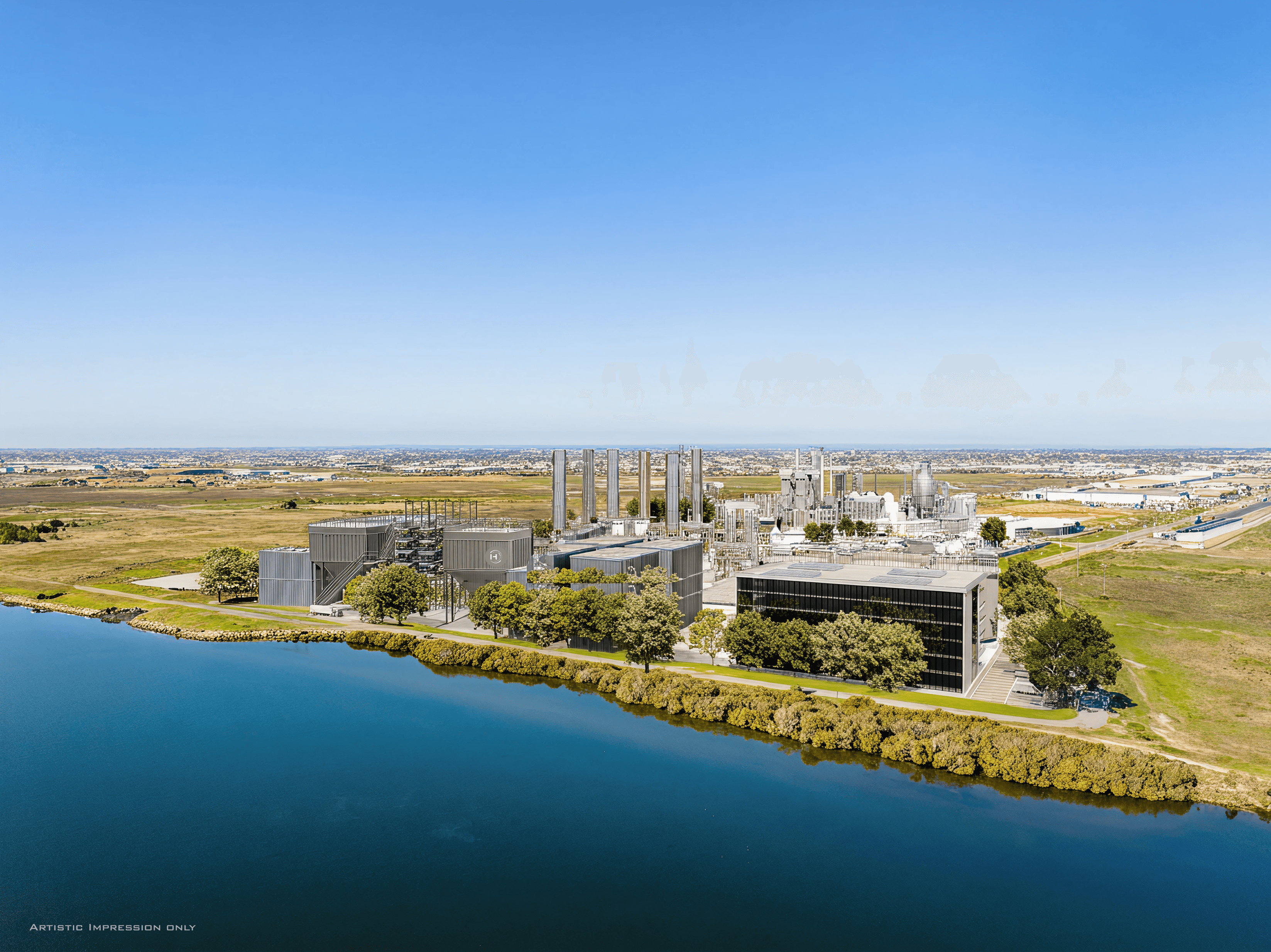
HAMR Energy is developing projects in Victoria and South Australia that will turn Australian-grown biomass, including residual forestry material into low-carbon fuels, with a primary focus on the helping customers to decarbonise across aviation, maritime, and heavy transport sectors that are hardest to abate.
HAMR's projects are backed by the Australian Government's $1.1 billion Cleaner Fuels Fund, announced by Treasurer Jim Chalmers and Energy Minister Chris Bowen at Ampol's Lytton Refinery in Brisbane. HAMR's projects promise to create more than 300 jobs, predominantly in regional Australia.
Sustainable Aviation Fuel (SAF) is a key focus. Qantas has set a target for 10% of its fuel to come from SAF by 2030, rising to approximately 60% by 2050 representing a significant and growing domestic market for producers like HAMR.
Watch and Read the Full ABC Feature
The full ABC News video and article 'Biofuels could bolster Australia's fuel security but right now, we're exporting what we need to make them' is available now.
The ingredients are here. The technology is here..Read and watch the full story on ABC News
ABC News | Interview with ABC, Dan Ziffer extra quotes "We have so much land, so many feedstocks and so much spare refinery capacity that the rest of the world looks at us and thinks: 'Why aren't they doing more in biofuels?' Click here to read —>
Did you know? Australia controls less than 20% of its own liquid fuel supply, importing the other 80% to keep the nation moving. Yet we export $3 billion in feedstocks (such as canola, sugarcane residue, forestry biomass) every year to other countries who refine it into fuel and sell it back to us at four times the price.
"We are in a bizarre situation right now that we are exporting our feedstocks and we pay four times the price to actually then use it once it has been refined. It is a completely nonsensical arrangement."
— Fraser Thompson, Cyan Ventures
The Opportunity: Self-Sufficient and a Major Exporter
Australia has the agricultural scale, the renewable energy resources and the refining infrastructure to become a genuine biofuels powerhouse. Experts featured in the ABC segment believe the opportunity is exceptional.
"Are the potentials significant? Yes. We're starting from a relatively low base, so our potential is significant. The opportunity space from where we are today is huge, and what's really exciting about Australia is we actually have all the resources."
— David Stribley, HAMR Energy
Biofuels, including biodiesel for heavy trucks and machinery and ethanol blended with petrol can be made from an enormous range of feedstocks: sugarcane, canola, residual forestry biomass and even CO2 and hydrogen to produce what is essentially a low carbon liquid electric fuel.
"I think that's what's exciting about biofuels, they can be made from so many different feedstocks. You've got companies looking at low-carbon liquid fuels from sugar, from ethanol type production. You've got companies like ours that are using residual forestry biomass. And then you can go to the full spectrum where you're producing what is essentially an electric fuel, think of it almost as a battery, but in liquid form."
— David Stribley, HAMR Energy
The numbers back the optimism. According to Shahana McKenzie at Bioenergy Australia, Australia could immediately add around "10 days to current fuel storage" simply by blending available biofuels into supply. Existing refinery infrastructure, currently producing 175 million litres annually, could expand to 650 million litres with investment and policy support.
"We have all the assets to be a self-sufficient fuel producer and also an exporter. Bigger tanks do not solve this. They are a short-term measure. If you have blocked shipping lanes, even the largest fuel storage is not going to be a good enough insurance policy. The litmus test for us right now is: are we going to think long-term about how we develop sovereign capabilities in fuel security, so we will never face this situation again?"
— Fraser Thompson, Cyan Ventures
Australia Has Done It Before
The vision isn't without precedent. At one point, Australia was a net exporter of oil fully energy self-sufficient in the 1980s, when a wave of domestic refineries came online.
"I mean one of the challenges with where we are today is we don't have a lot of oil left. We used to, if you consider the Bass Strait Oil and Gas field. At one point, Australia was a net exporter of oil. We were self-sufficient in the 80s, and that's when we saw all these refineries pop up. If we cast forward in the next 20 to 30 years, we actually have a lot of those resources today, but they're going to look a little different. They're not going to be your traditional refineries."
— David Stribley, HAMR Energy
Other jurisdictions are already proving the model. California has transformed its fuel mix, with a roadmap toward 50% low-carbon fuels in 20 years. Europe looks at Australia's agricultural scale and renewable energy resources with envy.
"We have one of the best agricultural sectors in the world. It is ginormous. We have one of the best renewable resources in terms of power as well. So we actually have what a lot of the world looks at — if you consider Europe, they look at us and they're envious of the actual products we have here. So yeah, the opportunity is exceptional."
— David Stribley, HAMR Energy
HAMR Energy: Turning Australian Biomass into Low-Carbon Fuel
HAMR Energy is developing projects in Victoria and South Australia that will turn Australian-grown biomass, including residual forestry material into low-carbon fuels, with a primary focus on the helping customers to decarbonise across aviation, maritime, and heavy transport sectors that are hardest to abate.
HAMR's projects are backed by the Australian Government's $1.1 billion Cleaner Fuels Fund, announced by Treasurer Jim Chalmers and Energy Minister Chris Bowen at Ampol's Lytton Refinery in Brisbane. HAMR's projects promise to create more than 300 jobs, predominantly in regional Australia.
Sustainable Aviation Fuel (SAF) is a key focus. Qantas has set a target for 10% of its fuel to come from SAF by 2030, rising to approximately 60% by 2050 representing a significant and growing domestic market for producers like HAMR.
Watch and Read the Full ABC Feature
The full ABC News video and article 'Biofuels could bolster Australia's fuel security but right now, we're exporting what we need to make them' is available now.
The ingredients are here. The technology is here..Read and watch the full story on ABC News
ABC News | Interview with ABC, Dan Ziffer extra quotes "We have so much land, so many feedstocks and so much spare refinery capacity that the rest of the world looks at us and thinks: 'Why aren't they doing more in biofuels?' Click here to read —>
"We have one of the best agricultural sectors in the world. It is ginormous. We have one of the best renewable resources in terms of power as well. So we actually have what a lot of the world looks at — if you consider Europe, they look at us and they're envious of the actual products we have here. So yeah, the opportunity is exceptional." — David Stribley, HAMR Energy
"We have one of the best agricultural sectors in the world. It is ginormous. We have one of the best renewable resources in terms of power as well. So we actually have what a lot of the world looks at — if you consider Europe, they look at us and they're envious of the actual products we have here. So yeah, the opportunity is exceptional." — David Stribley, HAMR Energy
"We have one of the best agricultural sectors in the world. It is ginormous. We have one of the best renewable resources in terms of power as well. So we actually have what a lot of the world looks at — if you consider Europe, they look at us and they're envious of the actual products we have here. So yeah, the opportunity is exceptional." — David Stribley, HAMR Energy
About HAMR Energy
About HAMR Energy
Media Enquiries
Media Enquiries
OUR LATEST NEWS
OUR LATEST NEWS